Tuesday, October 30, 2012

Reading: PLM Cloud Interest and AAA PLM Players

The interest to cloud PLM is growing these days. At the beginning of this year, I discussed future PLM business model during the PLM Innovation conference in Munich. You can navigate to my historical post here. You can see lots of conversations about cloud these days. However, until now, only one from major PLM players – Dassault, was playing cloud game. As it was mentioned by Bernard Charles during DSCC 2011 event, Dassault invested 2B into building of the unique online cloud platform. This is not true any more. Earlier last week, Siemens PLM announced the availability of TeamCenter on the cloud. Navigate here to read Siemens PLM announcement.  According to Siemens PLM:

Teamcenter on the cloud enables companies to move some, or all, of their computing infrastructure to a third-party cloud service provider versus investing in their own hardware. This gives customers cost effective access to enterprise grade IT infrastructure and resources without the need for capital expenditure. Siemens now supports Teamcenter on three of the leading cloud services, Microsoft Windows Azure, IBM SmartCloud™ Enterprise+ and Amazon Web Services. The company has completed a certification and enablement program for Teamcenter delivered on each of these service provider’s IaaS offerings. 

I found an interesting writeup about TeamCenter on the cloud made by PJ of TEC. Navigate to this link to read -Siemens Teamcenter Going to the PLM Cloud. PJ is analyzing what is behind TeamCenter cloud announcement. This is an important passage, in my view, which explains that:

While the benefits such as faster time to value, dynamic scalability, and lower TCO are indisputable, this is just the typical first cloud-enabling step of moving the infrastructure to the cloud. Certainly, there is also the benefit from accessing the PLM system from the Internet, and at the analyst event, we also saw a demo of a mobile user interface (UI) in the cloud. But our understanding was that Siemens is not yet going to provide a subscription model or a multitenant cloud.

At the same time, PJ concludes that despite cloud announcement, TeamCenter is not adopting ‘cloud PLM’ business by moving towards subscription model. I didn’t find any mentioning of subscription prices as well as information about future announcement. Siemens PLM press release mentioned only “business flexibility”, as was mentioned by TeamCenter cheif Eric Sterling. Here is the quote:

“The key benefit of Teamcenter on the cloud is the business flexibility it provides,” said Eric Sterling, Senior Vice President, Lifecycle Collaboration Software, Siemens PLM Software. “In today’s ever changing global landscape, the flexibility to dynamically manage infrastructure on the cloud gives customers the ability to scale up computing resources with demand and more importantly, scale down costs if demand decreases. This enables organizations to effectively manage IT budgets as an operating expense versus capital expense which can improve profitability. 

AAA PLM?

I learned an interesting term in PJ’s article – “Triple A” PLM players. As I mentioned in my earlier article, Open Source and subscription-based model used by cloud PLM apps are two major PLM business disruption forces. PJ summarized it by calling three vendors – Aras, Arena Solutions and Autodesk PLM (AAA):

Siemens acknowledged that its main interest is still the perpetual license play. The vendor admitted that the so-called Triple A PLM players—Arena Solutions, Aras Corp., and Autodesk 360 PLM— are disruptive forces in terms of PLM deployment and licensing. Siemens pledged to be responsive to the market—i.e., it is constantly reviewing its practices—but everything needs to be good for both the vendor and its customers. Term-based licenses and Siemens Finance Services were suggested as possible options in the meantime. 

PLM cloud awareness

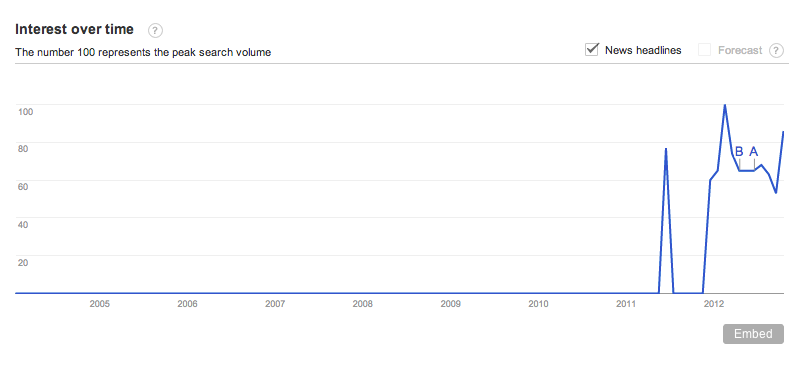
I usually do my “reality check” on Google trends. You can see that now “PLM cloud” is now a visible trend. At least, you can see it on Google’s trends, which confirms the growing cloud interest from players and customers in engineering and manufacturing space. Even it is not saying much to prove the adoption and customer experience with cloud PLM, it is a confirmation of the trend and strategic direction.

What about PTC / Windchill?

After TeamCenter cloud announcement, PTC Windchill is the only product (vendor) that didn’t refresh their interest in a cloud PLM play. Windchill has long time an agreement with IBM about hosting of Windchill on IBM servers. You can see this offering is available here, but I PTC didn’t provide any recent updates about that offering as well as a preview about future availability of Windchill on the cloud. You can only see IBM application on demand delivery model here.

What is my conclusion? In my view, customers are starting to recognize the value of the cloud technologies for PLM. It comes in multiple aspects – IT infrastructure optimization, business models allowing to pay for services as you need them, global access and many others. It would be interesting to see how cloud technologies and product offering will be developed by PLM vendors in coming years.

Best, Oleg

Tagged as: Aras, Arena Solutions, Autodesk, Cloud, Dassault, PLM, Siemens PLM

@OlegShilovitsky lines out the increasing interest and awareness for the 3 major cloud #PLM players, Aras, Arena and Autodesk.

5 steps to determine if your company is ready for PLM

Media_http4bpblogspot_azbft

Nice PLM readiness shortlist by @PLMJim

Reading up on: Tasty New Feature of PLM 360Project Status Roll Ups

« Gimme my file back! (Undo Checkout and Remove Reservation) | Main

10/26/2012

Feature Friday: Enjoy this Tasty New Feature of PLM 360–Project Status Roll Ups

4066561691_9573ddf621

One great new feature in this month’s release is the Project Task Rollup and Drilldown.

There’s new color coding on the Gantt chart to help you easily see potential problems in the schedule.  You can easily expand tasks and subprojects to get more details.

Learn more about Project Management on our Wiki or there’s a great User Briefing on PLM TV for the Project Status Roll Up feature – grab some popcorn and watch (well, it’s under 3 minutes, so maybe not a whole bowl – perhaps a cinnamon roll instead!).  ^MS

Photo: stevendepolo

Comments

Feed

You can follow this conversation by subscribing to the comment feed for this post.

Verify your Comment

Previewing your Comment

Posted by:  | 

This is only a preview. Your comment has not yet been posted.

Your comment could not be posted. Error type:
Your comment has been saved. Comments are moderated and will not appear until approved by the author. Post another comment

The letters and numbers you entered did not match the image. Please try again.

As a final step before posting your comment, enter the letters and numbers you see in the image below. This prevents automated programs from posting comments.

Having trouble reading this image? View an alternate.

This weblog only allows comments from registered TypeKey users. To comment, please enable JavaScript so you can sign into TypeKey.

Project management update inside #AutodeskPLM360

Reading: Vault Performance Issue caused by IIS Logfiles

« Custom Filestore ignored when Creating New Vault with a Configu File | Main

October 29, 2012

Performance Issue caused by IIS Logfiles

We received one positive result deleting all current IIS logs on C:\inetpub\logs\LogFiles\W3SVC

After deleting the performance issues were gone.

We are not sure whether it was the fact that they got 15000 log files or many logfiles with a huge size (or both together).

However it is worth deleting old logfiles anyway.

You also could optimize some settings of the IIS Logging:

IISLogging

TrackBack

TrackBack URL for this entry:
http://www.typepad.com/services/trackback/6a01156eaaf373970c017d3d154ce0970c

Listed below are links to weblogs that reference Performance Issue caused by IIS Logfiles:

Comments

Verify your Comment

Previewing your Comment

Posted by:  | 

This is only a preview. Your comment has not yet been posted.

Your comment could not be posted. Error type:
Your comment has been posted. Post another comment

The letters and numbers you entered did not match the image. Please try again.

As a final step before posting your comment, enter the letters and numbers you see in the image below. This prevents automated programs from posting comments.

Having trouble reading this image? View an alternate.

Small fix for performance issues in Vault casues by IIS logfiles.

Changing diffusion of innovation

« The end of should | Blog Home | Association »

The bell curve is moving (mass geekery)

We've got more nerds than ever before.

Rogers famously described the ways products are adopted:

Bellcurve2

On the left, geeks and nerds and people who love stuff because the new is new and edgy and changes things. All the way to the right, the laggards, the ones who want to be the last to change. And in the middle, the masses, the ones who wait for the new idea to be proven, cheap and widely adopted. Most people are in the middle, and a few are on either edge. (Note that in every area of interest, different people put themselves into different segments. You might be a shoe geek but a movie laggard).

Marketers work to change the market. And for the last thirty years, marketers have been working to turn people into geeks, into people eager to try the new. And it's working.

Shiftedbellcurve2

There are more and more people lining up to buy the new gadget, more exploring the edges of the internet, more willing to engage in ways that were seen as too risky just a generation ago.

In addition to an ever increasing amount of media and advertising about what's new, the products and services themselves are designed to draw us in. It used to be that a car nerd would buy a new car every year while the laggard could wait a decade quite happily before upgrading. Today, because our software connects, the upgrade cycle is built in. Like it or not, the new version (or the new TOS or the new interaction style) is about to become part of your life.

The cultural implications here are significant. We now live in a society with more people more willing to change more often. And that means your customers are restless, and more likely to walk away if you don't treat them the way nerds want to be treated. Amaze, delight and challenge...

Posted by on October 28, 2012 | Permalink

TrackBack

TrackBack URL for this entry:
http://www.typepad.com/services/trackback/6a00d83451b31569e2017d3d08592f970c

Listed below are links to weblogs that reference The bell curve is moving (mass geekery):

« The end of should | Blog Home | Association »

@SethGodin points out a shift in the diffusion of innovation bell curve happening right now. Where will it go? Not only is the bell curve moving left towards early adopters, but also the time a products remains actual and desireable is getting shorter.

Reading @SethGodin: The only purpose of 'customer service'...

« Free range | Blog Home | A bias for trust »

The only purpose of 'customer service'...

is to change feelings. Not the facts, but the way your customer feels. The facts might be the price, or a return, or how long someone had to wait for service. Sometimes changing the facts is a shortcut to changing feelings, but not always, and changing the facts alone is not always sufficient anyway.

If a customer service protocol (your call center/complaints department/returns policy) is built around stall, deny, begrudge and finally, to the few who persist, acquiesce, then it might save money, but it is a total failure.

The customer who seeks out your help isn't often looking to deplete your bank account. He is usually seeking validation, support and a path to feeling the way he felt before you let him down.

The best measurement of customer support is whether, after the interaction, the customer would recommend you to a friend. Time on the line, refunds given or the facts of the case are irrelevant. The feelings are all that matter, and changing feelings takes humanity and connection, not cash.

Posted by on October 25, 2012 | Permalink

TrackBack

TrackBack URL for this entry:
http://www.typepad.com/services/trackback/6a00d83451b31569e2017c32bd80bb970b

Listed below are links to weblogs that reference The only purpose of 'customer service'...:

« Free range | Blog Home | A bias for trust »

A strong argument from @SethGodin aiming your CS towards changing the feeling of your customer.
Automation and cutting away the human interaction and connection where ever possible will leave you with unsatisfied customers and a bad rep.

Friday, October 12, 2012

Reading: The Science of the Perfect Nap [#FlowGeneration]

The Science of the Perfect NapAccording to a growing body of research, napping is a smart thing to do. It can help refresh the mind, make you more creative, boost your intelligence, and even help you live a longer, healthier life. It's slowly gaining acceptance as part of a healthy lifestyle, even in some corporate offices. Read on as we share the science behind the need to nap, and a scientist-approved method for taking the ideal snooze.

Why We Need Naps

In our modern hurried world, making time for even a short nap might seem like an impossible luxury. Yet, for some, they may be necessary to make it through the day at peak mental and physical performance. Our bodies crave naps for a reason, some based on our evolution, others on our habits.

Not getting enough sleep

The No. 1 reason many people need a nap? Not getting enough sleep at night. While there is no magic number of hours that people need to get at night (the ideal varies by age and other highly individual factors), the National Sleep Foundation suggests that adults get seven to nine hours. Unfortunately, a CDC study found that more than 40 million workers get less than six hours a night. That lack of sleep can have consequences, and if it happens often enough your body may start seeking out rest during the day, leaving you in dire need of a nap.

Poor nutrition

Another easily remedied reason for feeling sleepy throughout the day is based on nutrition. Many people feel tired in the afternoon because of plummeting blood sugar levels after a poorly planned lunch. This can be caused by two things: not eating enough at lunch to supply enough energy to get through to dinner, or by choosing foods that don't contain enough protein and fiber and far too much of sugars and other carbohydrates. Either way, these kinds of lunches leave most feeling tired, sluggish, and worn out well before the work day is over.

Our bodies are programmed that way

It may be more common for people in the U.S. to only sleep at night, but that isn't exactly the way our bodies are necessarily designed to work. Wakefulness throughout the day is governed by our natural biological clock, a phenomenon more commonly referred to as the circadian rhythm. While some may not feel sleepy until evening, others experience a small "hump" in sleepiness in the mid-afternoon that's entirely normal and is actually programmed into the circadian schedule. As a result, the desire to nap is simply an expression of the natural rhythms of our bodies, regardless of whether we get enough sleep at night.

It's an evolutionary necessity

As the day goes on, learning ability, alertness, and focus degrade. A nap can help counteract that effect and give those mental faculties a boost. While this might not be an absolute necessity for survival today, especially with the invention of caffeine-laden energy drinks, at one point in our evolutionary history it just might have been. Slowed reaction times and decreased watchfulness could have meant the difference between life and death for our ancestors (and can still have a marked effect on our own success today). A short nap, even just 15 to 20 minutes, can greatly increase the faculties that increase the odds of survival, so it's only natural that we're predisposed to want to sleep.

Studies on Napping

So now that you know why your body is so determined to nap, it's time to learn what benefits there are to giving into that urge. There has been a tremendous amount of research done on the advantages of napping, and the results of just a few of those studies are shared here.

The benefits of napping apply even to the very young

Napping is good for you at any age, research suggests, and may even be essential for children who are still growing and developing. A University of Colorado Boulder study showed that toddlers between two and a half and three who missed a single daily nap showed more anxiety, less joy and interest, and a poorer understanding of how to solve problems. While children build up sleep pressure more quickly (the desire to need to sleep) due to highly active and connected brains, the same problems can be seen in adults who don't get in a daily nap.

Sleeping on the job is a good thing

Some companies, Google and Apple included, are allowing employees to take naps on the job, and science proves that that's probably a really great idea. Why? Studies show that power naps, short 10 to 15 minute naps, improve mental efficiency and productivity, which is a small investment in time for such a big payoff in company morale and production.

An afternoon nap markedly boosts the brain's learning capacity

Whether you're heading to class or just trying to learn a new skill, making sure you're well-rested beforehand can make a big difference, research from Berkeley suggests. A study done at the school found that sleeping for an hour dramatically boosts and restores brain power, in turn making it easier to learn and retain new information. Sleep clears out our short-term memory, making room for new information and priming us to be better, more efficient learners.

Naps are more effective than caffeine

Thinking of pouring yourself a giant cup of coffee? Consider a nap instead, as research has shown that it can be a better way to wake yourself up. When researchers compared the effectiveness of getting more sleep at night to drinking a cup of coffee or taking a nap, the nap was the clear winner. Naps help to genuinely refresh your body and their impact can be much more long-lasting than that of caffeinated drinks.

Napping can boost your memory

One of the most universally beneficial effects of napping is its effect on memory. Research at Harvard Medical School found that napping, especially when accompanied by dreaming, was an effective tool for improving memory and learning ability. Even better, you may get the benefits even if your nap is interrupted. A 2008 study showed that the onset of sleep may trigger active memory processes that remain effective even if sleep is limited to only a few minutes.

Even a short nap can have a marked effect on your health

There are dozens of research studies that correlate napping with some pretty amazing health effects. A study of Greek adults found that napping at least three times a week for 30 minutes or more was associated with a 37% lower risk of death from heart disease. A British study suggests that just knowing a nap is coming is enough to lower blood pressure. Other benefits of napping include: reduced stress and a lower risk of heart attack, stroke, diabetes, and excessive weight gain.

Naps make you more creative

Neuroscientists at the City University of New York found that taking a nap boosts a sophisticated type of memory that helps us see big picture ideas and be more creative. The study used a 90-minute nap, but researchers say even short naps (12 minutes or more) can have a positive effect on memory.

Want to boost performance? Take a nap

Whether you're flying a plane or just typing in reports, a nap can make you better at doing it. Research on pilots at NASA showed that a 26-minute nap in flight (while a co-pilot was on duty) enhanced performance by 34% and overall alertness by 54%. With those kinds of results, it's no coincidence that some of the world's top athletes, world leaders, and brilliant minds have all been avowed nappers.

How to Take the Perfect Nap

If you're ready to get into your own napping habit, here's a research-based method for getting the most out of your time sleeping. These tips will help you maximize the benefits of napping, and may just have you making naps a part of your everyday schedule.

1. Watch the time. The most beneficial naps during the day according to sleep experts are relatively short. This is because short naps only allow individuals to enter the first two stages of sleep. Once you enter slow wave sleep, it's much harder to wake up and you may be left feeling groggy for hours afterwards. Ideally, keep your naps under 20 minutes. Naps of this duration are short enough to fit into a workday but still give the benefits of improved mood, concentration, alertness, and motor skills. If you've got more time, a nap of 45 minutes can also have benefits, including boosts in sensory processing and creative thinking. If you go longer, aim for at least 90 minutes so you'll work your way through all the stages of sleep and won't wake up disoriented.

2. Find a quiet and dark place. Noise and light can disrupt your ability to sleep (though if you're really tired neither may really faze you) so it's best to limit them to get the most rest out of your nap. To limit distracting sounds, put in earplugs or listen to white noise. To cut out light, darken a room or employ an eyeshade.

3. Lie down. While it might be possible to fall asleep sitting up, it'll take significantly more time; about 50% longer. It's best to lie down so you'll get to sleep quickly and make the most of your time.

4. Get in the napping zone. If you want to fall asleep quickly and actually enjoy the restful benefits of napping, you need to shut out the nagging voices in your head that are reminding you of all the things you need to get done. Meditation techniques are a great way to do that, researchers advise. Concentrate on your breathing, relax your muscles, and even use visualization techniques to take you somewhere calming.

5. Coordinate your caffeine. If you need a little extra boost besides your nap, you should coordinate the two. Caffeine takes about 20 to 30 minutes to take effect, so if you drink a cup of coffee before you nap, it'll be kicking in just as you're waking up. The practice is called a "caffeine nap" and studies at Loughborough University showed that the combination can actually leave individuals feeling more refreshed than just one or the other alone.

6. Plan to nap. Ideally, you want to take a nap before you get to the point that extreme sleepiness can become dangerous or uncomfortable. So, plan naps into your day so you'll know one is on the horizon and you'll never be left feeling incredibly out of it as you work, drive, or do other tasks.

7. Set an alarm. You don't want to sleep longer than you intend, so always set an alarm to ensure that you wake up within the time frame you set for yourself and don't drift into sleep cycles that could leave you drowsy.

8. Cut out the guilt. Science has shown time and time again that napping is not only natural, it's extremely beneficial. Don't guilt yourself out of a nap by focusing on what you need to get done or worrying what others might think. Instead, enjoy the nap and reap the benefits of improved productivity, energy, and mental capacity that it offers.

Want more info on naps? Check out Lifehacker's tips here.

The Surprising Science Behind Napping | Medical Coding and Billing

This post originally appeared on the Medical Coding & Billing blog.

Image via EugenP (Shutterstock).

Want to see your work on Lifehacker? Email Tessa.

Ever since Tim Ferriss' 4HB turned me on to multi phase sleep cycles, it has become a sport to plan in power naps!
Personally I've tested powernapping during lunchbreak and just before driving home. Once even before an important meeting! http://lifehacker.com/5950732/the-science-of-the-perfect-nap.>

Thursday, October 11, 2012

Reading: DesignScript now available for download from Autodesk Labs

I’m really excited about this. A new programming language and environment for AutoCAD is now available for download on Autodesk Labs (and here’s the announcement on Scott’s blog, in case, and you should also be aware of this login/download issue – something I just ran into myself).

Way back when, I helped integrate the initial incarnation of DesignScript – although at the time we were using its working name, D# – inside AutoCAD. The father of the language, Robert Aish, was put in touch with me on October 17th 2008 and by the time I headed for Las Vegas on November 30th we had a working prototype (which was good enough to demonstrate at the Design Computation Symposium and even to be included in a video shown during the AU 2008 mainstage presentation). It was quite an intense period, believe it or not.

Here’s an old screenshot for chuckles:

D# demo for AU 2008

It was a really interesting project: working with Robert was a great experience, and we managed to create a demo app that had its claws deeply into AutoCAD in many areas (aside from a nice UI-level integration, we made heavy use of transient graphics for performance purposes, for instance).

A lot has clearly happened since then: professional language designers have become involved in the project, creating a design-centric, multi-paradigm (which in this case means primarily associative and imperative) programming language. A team of coders have created a core implementation that works extensively with AutoCAD geometry (as opposed to the small number of types we delivered with the initial demo).

I’m really looking forward to taking this version of DesignScript for a spin and posting a few samples on this blog. While it’s ultimately a technology that’s targeted at problems that would benefit from algorithmic or computational design – and mostly in the AEC space – I suspect that it could also be used more broadly. We’ll see!

In the meantime, here’s a quick snapshot of DesignScript inside AutoCAD 2013 (you need to be running the 64-bit version to install the Labs release) with the script from “Tutorial 1” loaded and executed:

The all new DesignScript with the 1st tutorial script loaded and executed

New labs development for ACAD2013; designscript for ACAD. Time to check it out!

FW: Gunnar Glasses Reduce Computer Eyestrain, Are 75% Off for the Next Two Days [Dealhacker]

Gunnar Glasses Reduce Computer Eyestrain, Are 75% Off for the Next Two DaysIt's hard being a computer geek, especially when you get headaches from staring at a screen all day. Gunnar glasses are a great way to keep eyestrain at bay, and you can grab them at a serious discount this week on Woot.

We've talked about the magic of Gunnar glasses before, and while they're pretty expensive, they occasionally go on sale for some pretty great prices. Today is one of those days: Woot is holding another sale on a number of different Gunnar styles, so if you missed out on the sale last time, you can grab a pair for as low as $35. They'll be on sale for the next two days, so grab them now while you can—they have a few styles, but they sell out quickly. Hit the link below to check them out.

Gunnar Gaming Glasses Galore! | Woot!

For all screen-staring realtions, eye-strain reducing glasses from Gunnar now on sale!

Friday, October 5, 2012

Made the "environmentally" conscious choice buying an EV? Guess again: Electric Cars Do More Harm To The Planet Than Previously Thought

New research suggests that electric cars are not the environmental panacea that they are thought to be. A report from a team at the Norwegian University of Science and Technology claims that the vehicles fail on three fronts: production; charging; and their eventual demise.

The length of the vehicle's life has an impact on its carbon footprint - those with a life of around 200,000 km improve on petrol and diesel engines by around 28 per cent and 19 per cent respectively. Halve the mileage, however, and an EV's effectiveness decreases by anything between 9 and 14 per cent. But it is the source of the electricity used for charging the car that is the problem. Using an EV in a country which relies heavily on fossil fuels for its electricity will, unsurprisingly, increase greenhouse gas emissions. Using the car in Europe, however, saw benefits of around 10 per cent, compared to traditional combustion engines.

EV production is, says one of the authors of the report, more environmentally intensive than the traditional automotive industry. Breaking a vehicle up at the end of its life is also more hazardous, as the batteries and motors use toxic materials such as nickel, aluminium and copper.

[Image via Creative Commons on Flickr]

Around the 200k km mark an improvement of 28% can't be called great. Combine that with the disposal of the batteries and it's even worse. Guess I'll keep driving my XM!

Reading: #AutodeskPLM360 & #CheekyMonkey's Nina Dar

Reading: Big Data's Biggest Obstacles (#HBR)

In my last blog on Big Data, I offered a very optimistic view of its promise: Big Data can allow us to see and predict human behavior objectively. What starts small — for instance, seeing through data how people really eat and move — can become massive — such as overhauling the health care system to address real behavior.

I am optimistic about Big Data, but I'm also realistic. There are many obstacles to getting to a good place with it. Here are some of them:

The Correlation Problem: When your volume of data is massive, virtually any problem you tackle will generate a wealth of "statistically significant" answers. Correlations abound with Big Data, but inevitably most of these are not useful connections. For instance, your Big Data set may tell you that on Mondays, people who drive to work rather than take public transportation are more likely to get the flu. Sounds interesting, and traditional research methods show that it's factually true. Jackpot!

But why is it true? Is it causal? Is it just an accident? You don't know. This means, strangely, that the scientific method as we normally use it no longer works, because there are so many possible relationships to consider that many are bound to be "statistically significant". As a consequence, the standard laboratory-based question-and-answering process — the method that we have used to build systems for centuries — begins to fall apart.

What we have to come up with is new ways to test the causality of connections in the real world far more frequently and earlier than we have ever had to do before. We can no longer rely on laboratory experiments; we need to actually do the experiments in the real world.

This will be disconcerting to many. We live in an era that builds on centuries of science, and our methods of building systems, governments, organizations, and so on are well defined. But with the coming of Big Data, we are going to be operating very much out of our old, familiar ballparks.

The "Human Understanding" Problem. Finding correlations in data is one thing. Understanding them in a way that allows you to build a new, better system is much more difficult. There needs to be a dialogue between our human intuition and the Big Data statistics, and that's not something that's built into most of our management systems today. Take the flu example. How do we act on that? Do we believe it? What does our intuition about such a fact tell us to do? Managers have little concept of how to use big data analytics, what they mean, and what to believe.

In fact, the data scientists themselves don't have much intuition either, and that's an even bigger problem. One estimate recently suggested that 70-80% of the results that are found in the machine learning literature — which is a key Big Data scientific field — are probably wrong, because the researchers didn't understand that they were overfitting the data. They didn't have that dialogue between intuition and causal processes that generated the data on the one hand, and the statistics on the other hand. They just fit the model and got a good number and published it (and the reviewers didn't catch it, either). That puts bad data out there in the world, where it's acted on by practitioners who likewise don't have the understanding of the data to act critically and appropriately.

If we start building our world on results like these, we're going to end up with disastrous results.

The Provenance Problem. Earlier this year, I ran a Big Data session at Davos, and heard from the CEOs of leading companies providing services in this area. They said that the biggest problem they faced in getting started on a Big Data application was getting the data out of silos and into a form where it could be used.

But this isn't just a garden variety, get-your-departments-sharing kind of corporate problem. It's more difficult that that, because with Big Data, it is typical that no one company owns all the data you need: you need new types of collaboration, both with your customers and with other companies that serve your customers.

How do you get the data out of those silos? The first step is to figure out who owns that data, which isn't always clear. Does the telephone company own information about your location while you were on the phone? Maybe they have some right to it. What if the data is attendant to a transaction with a merchant? Who controls that? Who can use and reuse that data? (And you thought the Telecom Act was complex.)

Unfortunately for most of the people in the room at Davos, this was a brand new concept, and they weren't up to speed about it at all.

The Privacy Problem. Just as businesses are beginning to see the power of Big Data, consumers are beginning to ask about their right to prevent the collection and use of every bit of data they leave behind. You can imagine using Big Data to make a world that is incredibly invasive, incredibly "Big Brother"... George Orwell's 1984 vision pales in comparison.

For the last several years, I've been helping to run sessions at the World Economic Forum around sourcing personal data and ownership of the data, and this effort has ended pretty successfully with what I call the New Deal on Data. The Chairman of the Federal Trade Commission, who's been part of the group, put forward the U.S. Consumer Data Privacy Bill of Rights (PDF), and in the EU, the Justice Commissioner declared a version of this New Deal to be a basic human right.

Both of these regulatory declarations put the individual much more in charge of data that's about them. This is a major step in making Big Data safer and more transparent, as well as more liquid and available, because people can now choose to share data. It's a vast improvement over having the data locked away in industry silos where nobody even knows it's there, or what's being done with it.

_____________________

BIG DATA INSIGHT CENTER

  • Get Started With Big Data: Tie Strategy to Performance
  • What If Google Had a Hedge Fund?
  • Can You Live Without a Data Scientist?
  • How to Repair Your Data
  • More >>

    Good read on the different problems related to big data.

    Tuesday, October 2, 2012

    Lessons from Kevin Cashman: On Leadership and Listening

    Questions are the expressive, probing language for growing others; listening is the receptive, facilitating language for growing others. These two complementary approaches form a continuous growth conversation loop. The deeper the questions, the deeper the listening; the deeper the listening, the deeper the next question. As we dig together with each tool, we mutually excavate new discoveries. As a result, the learning is never one-sided; it is a co-created process that engenders empathy, trust, and collaboration.

    The Power Of Authentic Questions

    Innovators working on solving problems and coming up with creative solutions rely on crafting the right questions. Leaders who are helping others to grow and innovate are always trying to craft the best questions to make a difference. Not only do innovators make asking questions an integral part of their lives, and ask more questions than non-innovators, they also ask more provocative ones--questions that provoke deep insight and understanding. Developing other leaders through questioning not only helps them grow, but it forces them to own their unique learning experiences.

    Imagine yourself in your next team meeting. Observe and check your impulses to be the expert, the problem solver, or the holder of the most seasoned experiences and perspectives. See yourself using questions more to:

    • Challenge yourself to look at solutions from a different point of view.
    • Stay in the state of curiosity longer to sort out where others are coming from.
    • Probe deeper into motivations, perspectives, and experiences.
    • Bring the "unspeakable" question to the surface.
    • Challenge the status quo to move the conversation to the next level.
    • Build on what is being said and take it one or two steps further.
    • Engage with people at a deeper level.
    What would be the impact to your team and organization if you leveraged the power of questions more? What would happen if you used your drive, analytical capabilities, and intelligence to help others to grow versus having the answers and solving the problems?

    The Power of Authentic Listening


    Following an extended period of international travel and organizational stress, an extremely self-confident, expressive senior executive lost her voice. She didn't just have a common cold; she had full-blown laryngitis. Unable to speak for 60+ days, she was forced to step back and listen. Her perception of her team changed radically. She saw her staff much more involved, expressive, and creative. Discussions were more uninhibited, free flowing, and creatively productive. Over time, she found that even her contributions of flip chart scribbles occasionally got in the way. "Listening showed me a way to do less but accomplish more. My team understands my vision, expectations, and values. I realize that what I need to do is discipline myself now to listen more and interfere less."

    Questions without authentic listening are thinly veiled challenges, judgments, and assertions; challenging questions with authentic listening activates latent power, potential, and collaboration.

    How often do we pause to be genuinely present with someone? How often do we really hear what the other person is saying and feeling versus filtering it heavily through our own immediate concerns and time pressures? Authentic listening is not easy. We hear the words, but rarely do we really slow down to listen and squint with our ears to hear the emotions, fears, and underlying concerns. Despite its value-creating properties, listening is rare for many leaders, and this lack of listening is one of the key reasons leaders derail.

    We have observed three common pitfalls that inhibit people from stepping back for authentic listening:

    Listening Pitfall 1: Hyper Self-Confidence

    When we see ourselves as the quintessential expert, the most experienced or accurate person in the room, we position ourselves to fall into a listening black hole. Others with valuable insights defer rather than speak up, diminishing rather than strengthening leadership teams. The kiss of death for collaboration, connection, and innovation is moving too quickly to our own perceived "right" answer. Slow down, and challenge yourself to pause and to listen a few minutes longer to move from transaction or hyperaction to transformation.

    Listening Pitfall 2: Impatience and Boredom

    When conversations or meetings don't reflect our point of view or are not intellectually challenging enough, we may get impatient or bored. Our inner voice, drowning out other voices in the room, says, "They are not getting it!" They may not be getting your solution, but they are getting something, possibly something valuable but hidden to you. If we are too caught up in our judgmental self-conversation, we can never really genuinely listen and hear what is going on around us. We lose on multiple levels: we don't learn; we don't know what is happening; we don't connect; and we don't innovate. Fight your impatience and boredom by looking deeper. Pause to question: What are they seeing and understanding that I don't see? What are the beliefs underneath what is being said? What are the hopes and fears underneath the surface? Stretch yourself mentally and emotionally to stay engaged by looking deeper. Remember, you can always disagree or reframe the conversation later, but as St. Francis advised, "Seek first to understand."

    Listening Pitfall 3: Bias for Action

    Sometimes listening is challenging because we want to do something, not just hear about it. Our hyperactive impulses derive from our certainty that we know the solution and reactively want to implement it. However, it isn't always optimal to rush in with the answers, unintentionally creating dependency, stunting the growth of others, and sacrificing transformative breakthroughs. Pause a bit longer to let groups struggle and strain more as they explore ideas, options, and deeper solutions. Listen to how they are collaborating, resolving conflict, and problem solving. Give introverts space to speak up. Step back more and step in only when absolutely necessary.

    What Listening Does

    Pausing to listen to the needs, concerns, and aspirations of our key people is crucial to growing talent. If you find yourself rushing about from meeting to meeting, project to project, and rarely pausing to check in with your key people, your team and organizational risk is mounting. Having deeper developmental discussions, really engaging people, communicates care and connection. Pausing for developmental dialogue elevates the business conversation from management tactics to leadership excellence.


    Try practicing authentic listening. Be with people and have the goal to fully understand the thoughts and feelings they are trying to express. Use your questions and comments to draw them out, to open them up, and to clarify what is said rather than expressing your view, closing them down, and saying only what you want. Not only will this help you to understand the value and contribution the other person brings, it will create a new openness in the relationship that will allow you to express yourself and be heard more authentically as well.

    Authentic listening creates the platform for true synergy and team effectiveness. Valuing and attending to different perspectives from diverse sources results in a more complete understanding of issues and more elegant solutions. Authentic listening is the soul of growing others.

    Reprinted by permission of Berrett-Koehler. Excerpted from THE PAUSE PRINCIPLE: Step Back to Lead Forward, copyright 2012 Kevin Cashman. All rights reserved.

    Kevin Cashman is a Senior Partner, CEO & Board Services, Korn/Ferry International. He is recognized as a pioneer in leadership development and executive development, focusing on optimizing executive, team, and organizational performance.

    [Image: Flickr user Joe Philipson]

    Lessons extracted from "The Pauze Principle" by Kevin Cashman.

    Monday, October 1, 2012

    Mimicing Gmail with Outlook (http://lifehacker.com/5948053/dirty-dishes-speaker-stands-and-gmail-in-outlook)

    Get Gmail's Archive Functionality in Microsoft Outlook

    MsCassLopez shows us a useful feature in Outlook:

    If you want to get Gmail's archive functionality in Outlook, there's an easy way to do it built in.

    Click the New folder link in the folders pane and call your new folder Archive. You'll see the new folder called Archive.

    Then go to Settings > More Mail Settings > Instant Actions > Add Actions > Move To. In the Move To box that appears, select your Archive folder and choose an icon. Enable the Mark as read option if you like, then click Save. If you want the Archive icon always showing then hit the Move Down button to move it to the Show Always section before you click Save.
    In your inbox when you mouse over a message, you'll see your new icon. Click it to send the message to the Archive folder.


    Its just a ride...

    A coworker just reminded me of a comedian I love but got to know years after he passed away.

    The following text was pasted into a mail to succesfully cheer him up.


    From the fabulous Bill Hicks (image from wikipedia)

    220px-bill_hicks_at_the_laff_stop_in_austin_texas_1991_2_cropped
    http://en.wikiquote.org/wiki/Bill_Hicks

    "The world is like a ride in an amusement park, and when you choose to go on it you think it's real because that's how powerful our minds are. The ride goes up and down, around and around, it has thrills and chills, and it's very brightly colored, and it's very loud, and it's fun for a while. Many people have been on the ride a long time, and they begin to wonder, "Hey, is this real, or is this just a ride?" And other people have remembered, and they come back to us and say, "Hey, don't worry; don't be afraid, ever, because this is just a ride." And we … kill those people. "Shut him up! I've got a lot invested in this ride, shut him up! Look at my furrows of worry, look at my big bank account, and my family. This has to be real." It's just a ride. But we always kill the good guys who try and tell us that, you ever notice that? And let the demons run amok … But it doesn't matter, because it's just a ride. And we can change it any time we want. It's only a choice. No effort, no work, no job, no savings of money. Just a simple choice, right now, between fear and love. The eyes of fear want you to put bigger locks on your doors, buy guns, close yourself off. The eyes of love instead see all of us as one. Here's what we can do to change the world, right now, to a better ride. Take all that money we spend on weapons and defenses each year and instead spend it feeding and clothing and educating the poor of the world, which it would pay for many times over, not one human being excluded, and we could explore space, together, both inner and outer, forever, in peace." 


    Worth remembering.